
贝恩:印度慈善事业2014年报告(英文 32 页)
The need to build an RMNCH+A sector
Historically, developing countries have struggled to tackle large-scale health initiatives. In India, a significant portion of the population still lacks access to healthcare. While recent research indicates that the country has made some healthcare advances, India still has a ways to go to reach the Millennium Development Goals or catch up with developed countries like the US. In particular, healthcare services for women and children are disappointing compared with the rest of the world. A 2012 survey by TrustLaw, a division of the Thomson Reuters Foundation, placed India at the bottom of the ranking among G20 countries for policies that promote gender equality and give women access to healthcare, among other criteria.
That said, it is important to note that we are currently at an important juncture. The post-liberalisation period has been marked by significant economic progress: growing incomes and a consumption boom. To ensure social progress with economic development, it is critical to quickly address basic social and health issues. Only then will we see India’s population completely empowered.
OurIndia Philanthropy Report 2014seeks to inform the next level of ecosystem building required to address the RMNCH+A challenge in India.
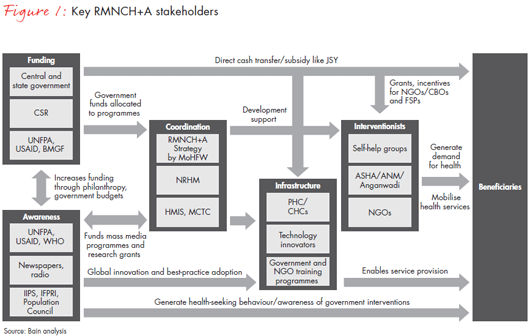
- Beneficiaries:recipients of the services
- Interventionists:skilled and semi-skilled workers who execute the needed services in the field
- Infrastructure providers:physical establishments, technology and training to enable the services
- Funders:sources of capital that support the activities of various stakeholders
- Coordination bodies:strategic monitoring and decision-making entities for systemic progress
- Organisations that promote awareness:development agencies, mass media and research institutions

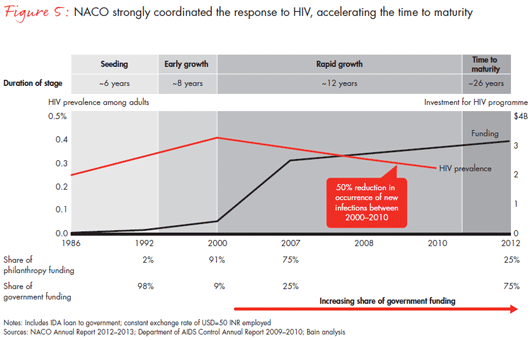
Strong coordinating agencies will accelerate the pace of development.Some ecosystems (for example, HIV) evolve rapidly, at a uniformly fast rate, and take about 25 years to reach maturity. Others develop in spurts and have long periods of stasis between stages. The microfinance ecosystem, for example, remained in the seeding stage for nearly 30 years before entering the growth stages. The differences can be attributed to the National AIDS Control Organisation’s (NACO’s) effective coordination and the microfinance institutions’ lack of organisation.
Expansion of delivery and support systems will determine the time to maturity.The microfinance sector’s mandate was to provide financial inclusion through rural banking services, but for almost 30 years, several public initiatives failed. Then the SHG Bank Linkage programme established a sustainable channel for the flow of funding and pushed the ecosystem through the early growth phase. The polio ecosystem is another example of how organised government action can move the sector through the growth stages. In the case of HIV, a strong delivery system and untiring efforts made by nonprofits to raise awareness provided the necessary interventions to high-risk groups.
Philanthropic and development agencies have been effective in spurring rapid growth.The microfinance ecosystem matured with the private sector’s participation, but it is important to note that philanthropic and development agencies set the ball rolling. With the failure of the government’s social banking initiatives, external funds like the International Fund for Agricultural Development and the Department for International Development stepped in and set up the National Microfinance Support Project, establishing much-needed momentum. Coupled with other government initiatives, like the SHG Bank Linkage Programme, scale was established in these operations, which eventually spurred the private sector’s participation, especially mainstream banks. A similar trajectory was seen with the HIV ecosystem.
Step-growth increases in funding can bring about rapid growth.For the HIV epidemic, the role that the National AIDS Control Programme (NACP) played was pivotal, increasing total funding by nearly eightfold in 12 years. New HIV infections dropped by 50% in that time, and India managed to control what was a crisis.
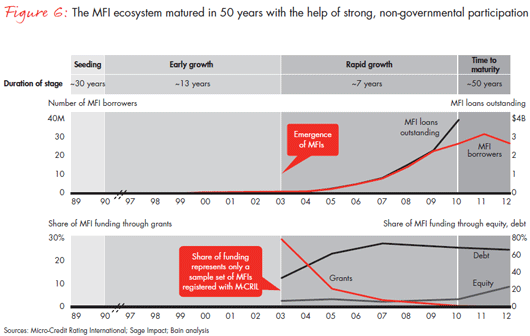
The front-loading strategy for philanthropic funding works.Sensing a growing HIV crisis, external development funds and philanthropic organisations contributed to the second phase of the NACP, funding nearly 90% of the programme. Their support continued to flow into the third and much larger phase of the NACP. By providing the government with much-needed support in the fledgling stages, they helped develop a critical ecosystem for HIV. After achieving critical targets set by the fourth phase of the NACP, overall funding growth has flattened, with contributions falling to just 25% of the total funding received in the fourth phase. In microfinance, this trend can also be seen, with the grant funding to microfinance institutions dwindling in recent years (see Figure 6).
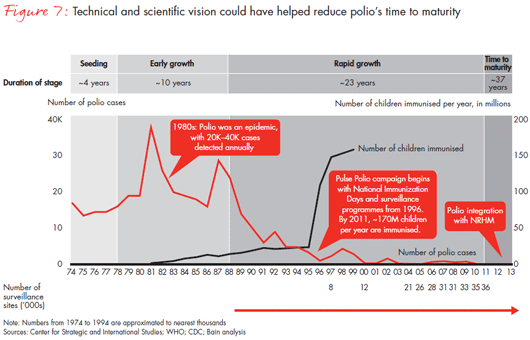
Innovation has the potential to reduce response times.Scientific and technical vision was especially critical for controlling the polio epidemic (see Figure 7). The unfortunate choice to go with OPV drops (the low-cost option) instead of IPV shots lengthened the fight against polio by, it is believed, 10 years beyond 2000—the target eradication year. In the fight against HIV, however, low-cost anti-retroviral drugs were vital, being easily accessible and affordable to all patients. The private sector will have to take the lead in R&D.
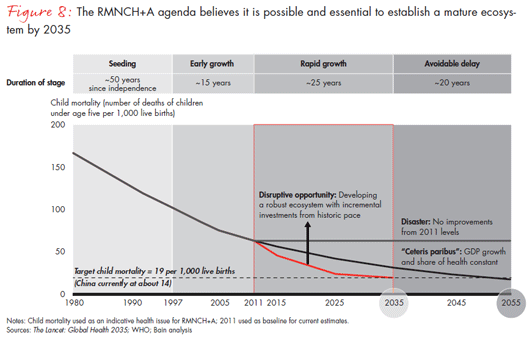
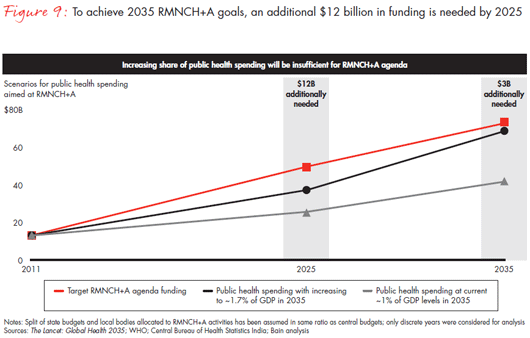
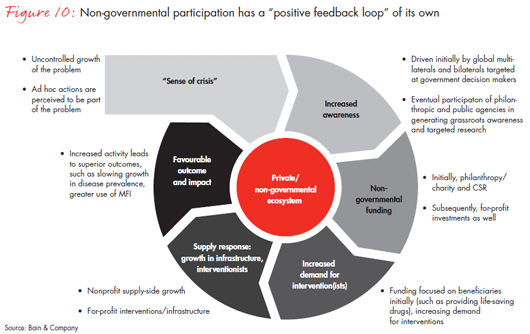
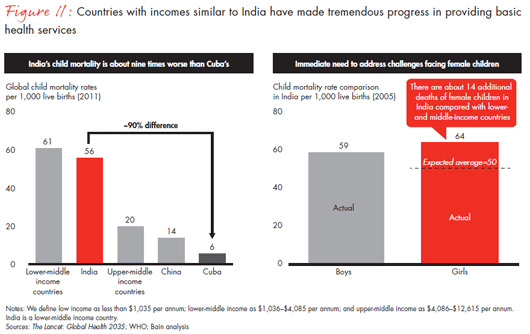
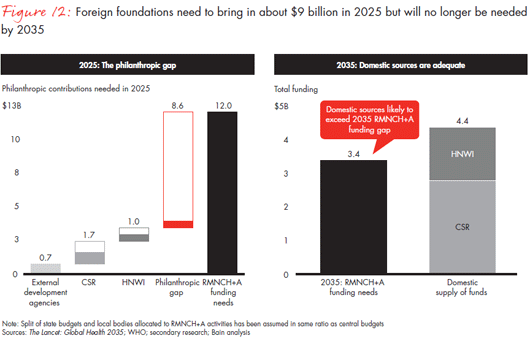
Funding from non-state sources will be critical to meet targets.Funding from donors will need to replicate the HIV story. A clear road map for 2025 and 2035 has been laid out (see Figure 12). The urgent need is quite evident: According to our estimates, only 7% of funding in this space comes from philanthropic sources, with the NRHM dominating the fund pool.
Corporate social responsibility is expected to take off.The new Companies Act formalises the role of corporate social responsibility (CSR) which is at 2% of profit after tax for big companies. This regulatory change is likely to unlock $3.7 billion in CSR total spending in 2014. However, this largely corporate kitty is highly competitive with several causes likely to compete for attention and spending, such as education and the environment. Public health accounts for 20% of the total CSR spending currently. Doubling contributions to healthcare with a constant share going to RMNCH+A funding in 2025 could contribute $1.7 billion (see Figure 13).
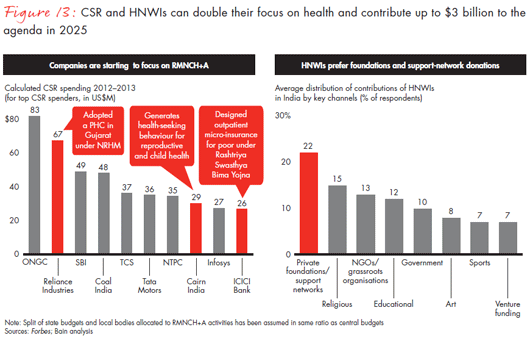
Positive outlook on HNWI contributions.Philanthropy by Indian HNWIs accounts for 0.1% of GDP. As Indians get wealthier by 2025, HNWIs can help plug the gap by $1 billion. Doubling the share healthcare gets from overall philanthropy could potentially raise an incremental $1 billion.
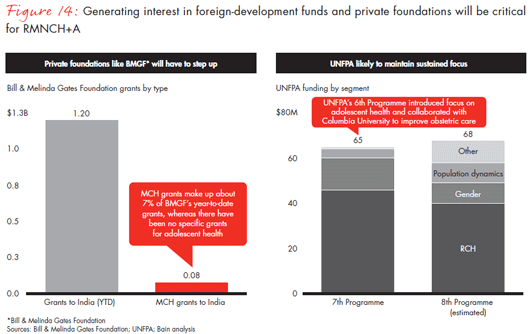
Bilaterals and multilaterals are unlikely to increase investments.Historically, these donors have had strong track records of funding Indian projects; however, going forward, as Indians become wealthier, their commitment may begin to weaken and funding levels may come down. By 2025, we don’t expect external donors to increase their contributions from their current levels (see Figure 14).
Support networks will need to support CSR funding.Given the rush of capital expected with the passing of the CSR bill, assessing the quality of grass-roots organisations has become most important. Corporations will need assurance that their money is being put to good use by competent organisations. Support networks will be critical to achieving this, by bringing experienced teams and best practices to conducing nonprofit due diligence (see Figure 15).

NGO participation needs to be formalized.NGOs are currently participating in a regulatory and legal vacuum, so a framework needs to be developed. Self-help groups need to expand their attention to health issues, and civil society organisations need to scale up. According to our estimates, the current coverage of 30 health-focused NGOs per 1 lakh women will need to increase to 125 per 1 lakh women if the scale of HIV is to be achieved. Clearly, potential exists for a large scale-up.
Government training programmes need assistance.Apart from a full-scale rollout of interventions, prioritised by the Ministry of Health and Family Welfare, nonprofits must also focus on training programmes for government field workers like ASHAs. This will improve the efficiency of established large-scale networks and create significant impact. Examples like the nursing institute set up by the Clinton Health Access Initiative for AIDS should serve as a useful template.
An integrated national health mission is the key to successful government intervention.Several issues on the priority agenda are likely to get impetus, with greater mindshare owing to the merger of the NRHM with its urban counterpart. More important, the share of funds left undisbursed will need to come down from the current 20% to 30% levels. Better process management and transparency of coordination efforts can help achieve this.
Convergence of vertical health programmes is needed.Awareness of health issues must continue to be programme based, and a holistic awareness campaign is required to achieve long-term results. Ministry-level coordination needs political will to establish linkages with one another and reduce inefficiencies.
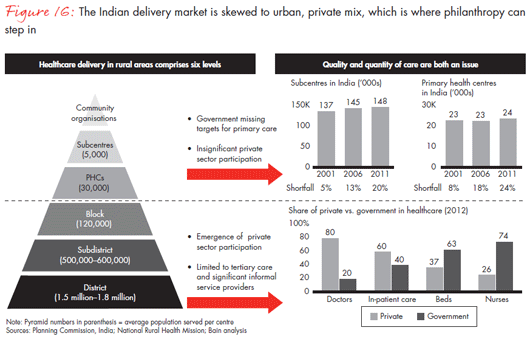
Better healthcare facilities are needed.The current system is skewed towards the urban tertiary care space and limited participation of the private sector (see Figure 16).
Workforce effectiveness needs improvement.Community workers like ASHAs and anganwadi workers have almost achieved government targets with current levels at 90%. A revamped training mechanism will need to be institutionalised, as many workers are semi-skilled and will need specific training.
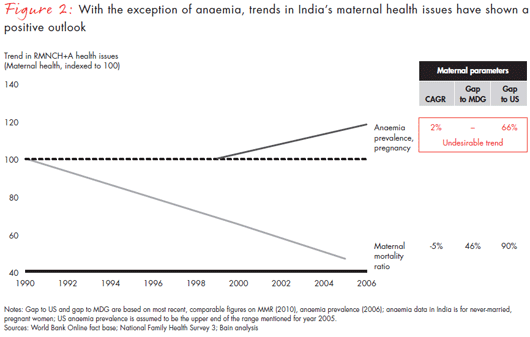
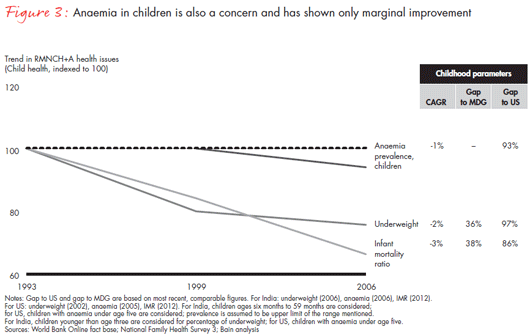
Successful awareness campaigns need to be replicated.Family planning awareness strategies through mass media registered substantial success. The achievement of infant mortality targets in Tamil Nadu generated large-scale news interest recently, and similar results will drive the awareness at all levels. That said, the need for the government to ramp up efforts is pressing. There are several other programmes that need similar treatment, such as anaemia, which has been troubling in recent times. Nonprofits too can support this area as they have done with HIV in the past.
Forge strong partnerships with diverse players.Multisector collaborations multiply the strengths of their participants, and this makes them an effective vehicle to implement initiatives. Public, private and nonprofit participation models need encouragement.
Help technologies achieve scale.Social enterprises like Embrace have proved that technology can alter the RMNCH+A landscape. Impact investment funds and donors can support this area, especially to scale up promising concepts. The next few years will need to see successes in areas like mobile health, with the help of global innovation.
Target outreach at the community level.Services need to be deployed at the grassroots level. The World Health Organization’s research has established that a 20% increase in community interventions can save the lives of 486,000 women, infants and children. This can be achieved at a cost of $1.2 per capita. Quality improvements in facility-based care can save an additional 105,000 lives at a cost of $0.5 per capita. Preventive care during childbirth can reduce maternal mortality by 29%, and training of skilled birth attendants can reduce infant mortality by 27% from current levels.
解锁完整报告,深入了解慈善相关研究分析!
| 会员类型 | 价格 | 特点 |
|---|---|---|
| 包月 VIP | ¥299 /月 | 无限下载 |
| 包季 VIP (特惠) | ¥799 /季 | 高性价比 |
| 包年 VIP | ¥2999 /年 | 长期研究必备 |
热门专题与研究领域
AI 辅助MBA/EMBA论文写作 + 专家精修
每年为数千个企事业和个人提供专业化服务;量身定制你需要的研究报告的资料和报告
相信我们!企业客户遍及全球,提供政府部门、生产制造企业、物流企业、快消品行业专业化咨询服务;个人客户可以提供各类经济管理资料、商业计划、PPT、betway官网推荐 指导等。
点此填写您的需求15+年的经验,值得信赖
2024betway必威体 © 沪ICP备05002998号-1
